ALEXANDRARENS
Sustainable fashion in action
A search to our fashion waste
In this project I started a micro-campaign around the large mountains of waste produced by the fashion industry. It started for me when I started thinking about what to do with my fabric leftovers after making all kinds of garments. My mother also had quite a collection, but she used it to stuff cuddly toys or to reinforce bags. This is ideal for a small scale, but where do all those big factories go with their leftovers? And where do our old garments go when we no longer wear them? Through the internet I have come across some answers, which I would rather not have known but are the hard truth.
The problem
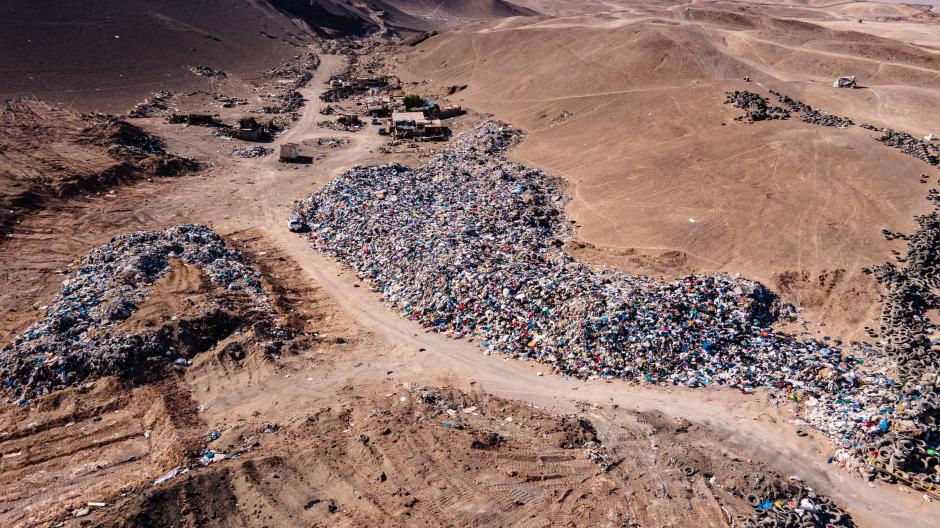
What do you do with your old clothes? Some people give these to thrift stores, donate them, or throw them in the trash. In the USA, only 15% of our old clothing ends up in second-hand shops, while the rest ends up in waste heaps. An example of this is located in the Atacama desert in Chile, where 4 million tons of clothing waste are dumped every year. This is partly because Chile allows this and has a 'free trade zone'. Economically this is good, the poorer population searches for clothing through the mountains and sells clothing that is still sound on the second-hand market or wears this clothing themselves. On an ecological level, this is a different story. A strong chemical smell hangs over the mountains of waste, due to the fires that often start spontaneously here.
The cause
How come now? How did the fashion industry let it get to this point? This is partly thanks to fast fashion trends that disappear as quickly as they emerge. As a result, the industry has to produce even faster and in larger quantities in order to keep up with the trends. This also leads to a faster growing mountain of waste and a poorer quality of clothing. By using cheaper and less durable materials, one can keep up with this pace, with the result that the clothing also shows signs of wear more quickly. This makes it difficult to recycle the clothing, only less than 1% of our clothing is recyclable and it costs more than dumping it on waste mountains in developing countries. In addition, brand new clothing also ends up in these places, these are the pieces that do not get sold in the shops. Again the same story here: it is cheaper to dump than to recycle.
The effect
Everyone knows that our waste mountains are bad for the environment, but what makes it so unhealthy? Because most clothing is made of synthetic materials, it decays very slowly or not at all. In addition, this clothing ignites so easily that there are weekly fires at these dumping sites. This also has an impact on local residents, their health is disturbed. This also has an impact on our planet: raw materials are being exhausted and in most cases even polluted. Clean water in the rivers is becoming scarce in these areas. Another reason why the health of local residents is affected
Some solutions
How can we as individuals or consumers alleviate this problem a little bit?
The obivious solution is to shop less and to invest in slow fashion, but that will have a major impact on our economy. Another solution is to recycle, repair minor damage and reduce our clothing to pieces of fabric ourselves. A good example of this is Maria Alina Hilson, this lady pays the poor to collect fabric scraps and bring them to her. Together with some volunteers, she makes backpacks, fanny packs and hats and sells them. Because it is made of fabric remnants, each item is very unique. This is a good solution for recycling the waste from the fast fashion industry, instead of it ending up in the waste mountains. This would already be a small step in the right direction.
In addition, there is also the Fabrics Bank, which is a barter for fabric scraps. For example, you bring in 10 kg of fabric, and then you can choose 7 kg of fabric to take with you. This initiative ensures a circular and sustainable model. Of course there are conditions attached to the substances you bring in. They must not be damaged, no tears, no stains or the like. The Fabrics Bank therefore sells these fabrics or processes them into new products.
Finally, the industry could also switch to a circular model by making small adjustments to the product design. When they can integrate an easy deconstruction of a garment, the recycling of the clothing becomes possible on an industrial level. A second option is to make clothing compostable, this could be possible by using as much natural fibers as possible and with little or no chemical processing. This is only for the basics, such as underwear, stockings and T-shirts. As a last option, recolor clothing with natural dyes, such as turmeric, beet juice or flowers. For example, fewer chemicals enter the rivers and the clothing can also be compostable. In addition, it ensures a unique piece, because after each wash the color fades a bit, just like jeans with a worn look. Especially in the era of customization and DIY, this could be very interesting.
Who are my sources?
If you want to learn more about this problem, you can download my source list and do your own research even more!